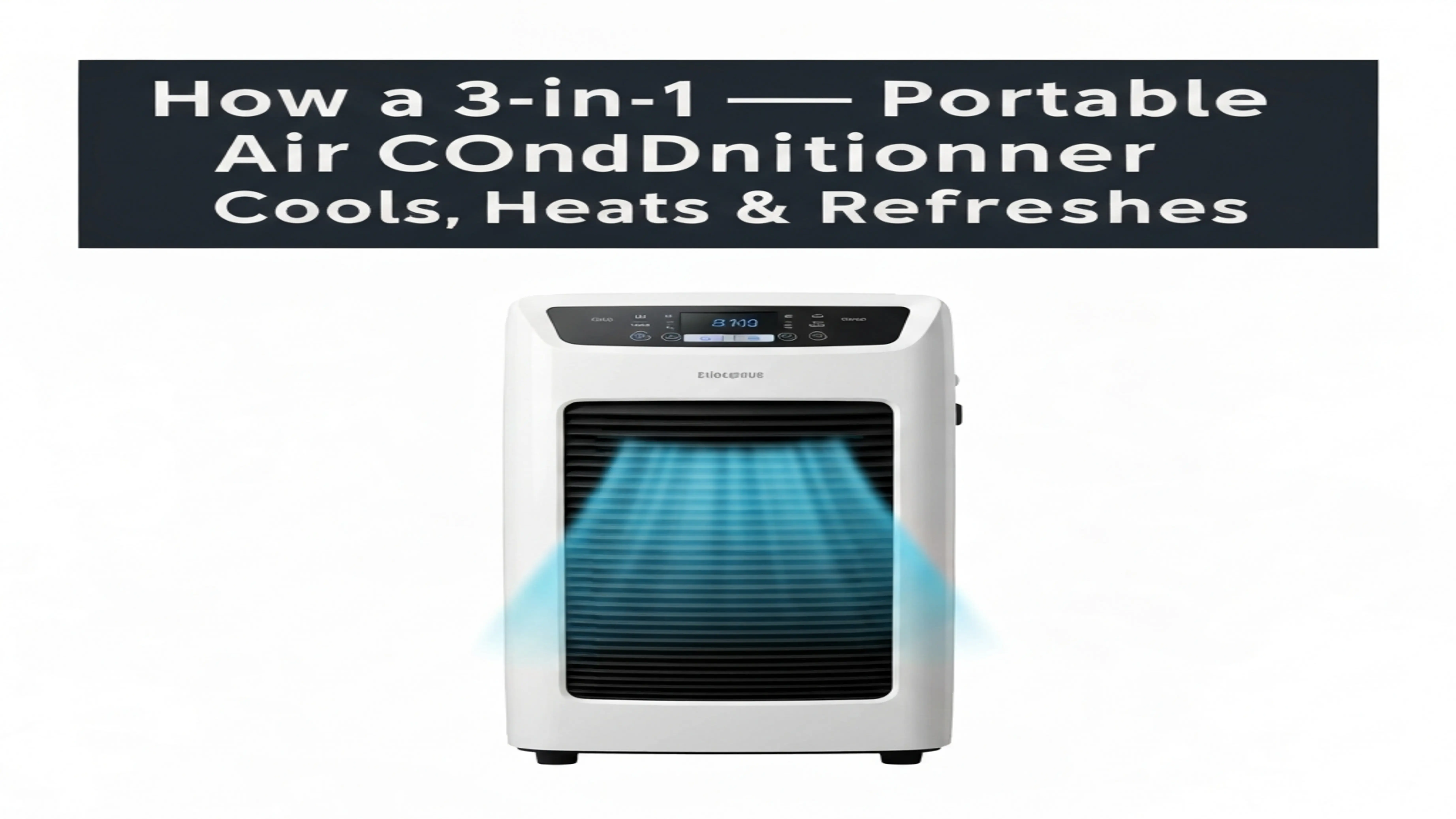
Imagine a single appliance that can keep you cool in the scorching summer, warm during chilly winter nights, and provide a refreshing breeze all year round. A 3-in-1 portable air conditioner does just that! These versatile units are becoming increasingly popular for their convenience, efficiency, and ability to adapt to different climate needs. But how exactly do they work? Let’s dive into the technology behind these amazing devices.
The Core Functions: Cooling, Heating, and Refreshing
A 3-in-1 portable air conditioner, at its core, combines the functionalities of a standard air conditioner, a heater, and a fan. This multi-functionality stems from the ingenious way they manage air circulation, temperature regulation, and, in some models, even air purification.
- Cooling: During the summer months, the unit operates as a traditional air conditioner, removing heat and humidity from the room.
- Heating: When winter arrives, the appliance reverses its cycle to generate heat, providing warmth and comfort.
- Refreshing (Fan Mode): For milder days, the fan mode circulates air without cooling or heating, offering a gentle breeze and improved ventilation.
How Cooling Works: The Refrigeration Cycle
The cooling function of a 3-in-1 portable AC relies on the refrigeration cycle, a process involving a refrigerant, a compressor, a condenser, an expansion valve, and an evaporator.
- Refrigerant Circulation: The cycle begins with a refrigerant, a substance that easily changes between liquid and gaseous states, circulating throughout the system.
- Compression: The compressor increases the pressure and temperature of the refrigerant, turning it into a hot, high-pressure gas.
- Condensation: This hot gas then flows into the condenser, where it releases heat to the outside environment and condenses into a high-pressure liquid. The released heat is typically expelled through an exhaust hose that vents to the outside.
- Expansion: The high-pressure liquid refrigerant passes through an expansion valve, which reduces its pressure and temperature, turning it into a cold, low-pressure mixture of liquid and gas.
- Evaporation: This cold mixture enters the evaporator, where it absorbs heat from the room air passing over it. As the refrigerant absorbs heat, it evaporates into a low-pressure gas, cooling the air in the process. The cooled air is then blown back into the room.
- Cycle Repeat: The low-pressure gas returns to the compressor, and the cycle repeats.
The key to the cooling process is the refrigerant’s ability to absorb heat from the indoor air and release it outside. This continuous cycle effectively lowers the room’s temperature.
How Heating Works: The Heat Pump Principle
The heating function operates on the principle of a heat pump, which is essentially a reversed refrigeration cycle. Instead of extracting heat from the indoor air and releasing it outside, the heat pump extracts heat from the outside air (even when it’s cold) and releases it inside.
- Refrigerant Circulation: Similar to the cooling process, the cycle begins with a refrigerant circulating throughout the system.
- Reversed Flow: A reversing valve redirects the flow of the refrigerant.
- Evaporation (Outside): The refrigerant absorbs heat from the outside air in the evaporator (which now acts as a condenser). Even in cold weather, there is still some heat available in the air.
- Compression: The compressor increases the pressure and temperature of the refrigerant.
- Condensation (Inside): The hot, high-pressure refrigerant flows into the condenser (which now acts as an evaporator), where it releases heat into the room.
- Expansion: The refrigerant then passes through an expansion valve, reducing its pressure and temperature, and the cycle repeats.
In essence, the heat pump transfers heat from the outside to the inside, providing warmth to the room. This is a more energy-efficient method of heating than traditional electric resistance heaters.
The Refreshing Fan Mode: Air Circulation for Comfort
The fan mode is the simplest of the three functions. It involves the unit’s fan circulating air within the room without engaging the cooling or heating components. This can be useful for creating a gentle breeze, improving air circulation, and distributing air evenly throughout the space.
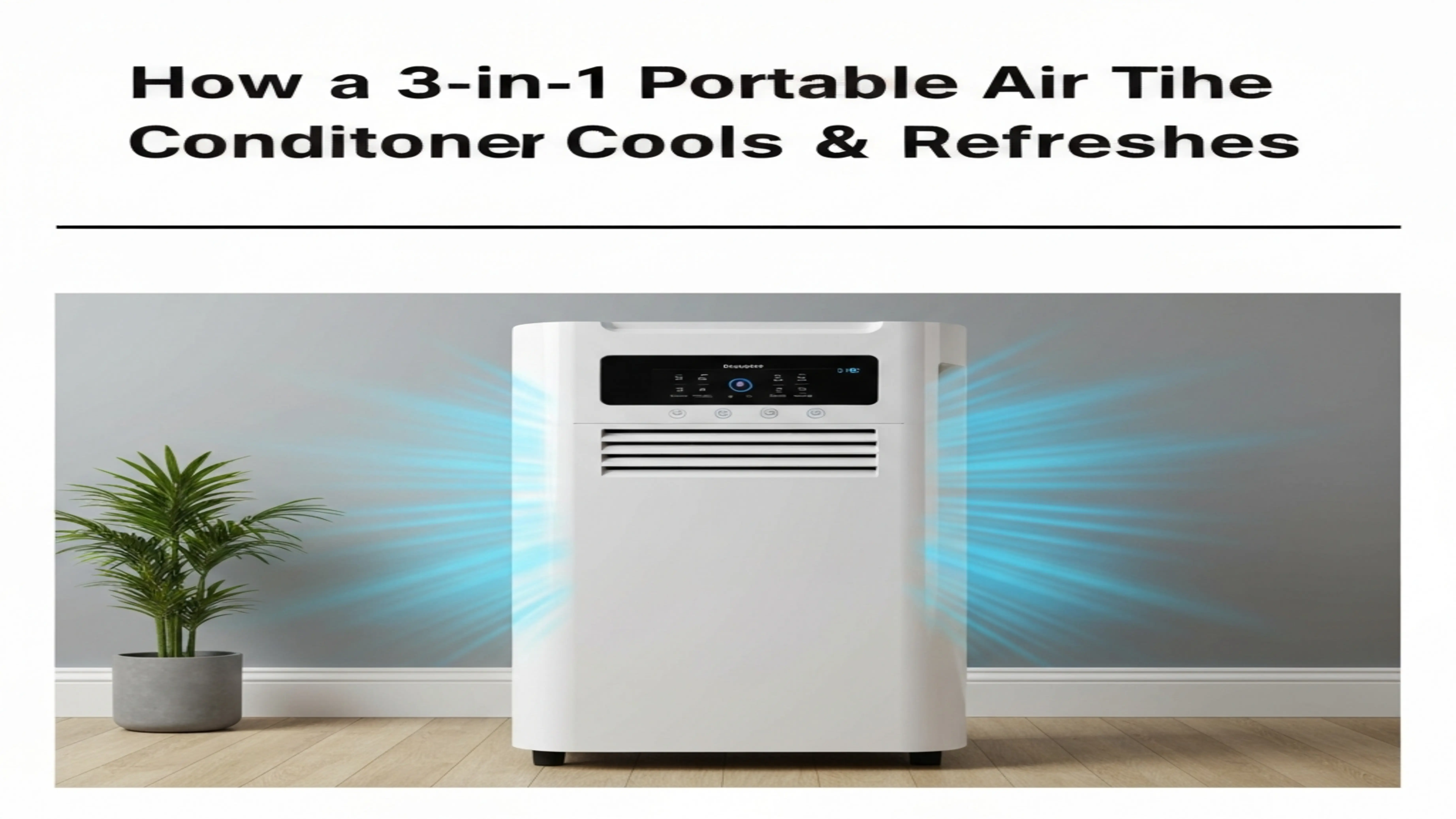
Key Components of a 3-in-1 Portable Air Conditioner
Understanding the core functions requires knowing the vital components that make it all possible.
- Compressor: The heart of the system, responsible for compressing the refrigerant and driving the refrigeration cycle.
- Condenser: Releases heat from the refrigerant to the outside environment during cooling and to the inside during heating.
- Evaporator: Absorbs heat from the indoor air during cooling and from the outside air during heating.
- Expansion Valve: Reduces the pressure and temperature of the refrigerant.
- Refrigerant: The substance that carries heat throughout the system.
- Fan: Circulates air across the evaporator and condenser coils to facilitate heat transfer.
- Control Panel: Allows users to select the desired mode (cooling, heating, or fan), set the temperature, and adjust other settings. You can explore options and consider your home’s ventilation when choosing the best portable AC from Marinokitchen.
- Exhaust Hose: Vents hot air to the outside during cooling mode.
- Air Filters: Remove dust, pollen, and other particles from the air, improving air quality.
Benefits of a 3-in-1 Portable Air Conditioner
Investing in a 3-in-1 portable air conditioner offers numerous benefits:
- Versatility: Provides cooling, heating, and fan functions in a single unit.
- Portability: Easy to move from room to room, allowing you to cool or heat only the areas you need.
- Space-Saving: Eliminates the need for separate cooling and heating appliances, saving valuable space.
- Energy Efficiency: Heat pump heating can be more energy-efficient than electric resistance heating.
- Cost-Effective: Can be more affordable than purchasing separate air conditioners and heaters.
Considerations When Choosing a 3-in-1 Portable Air Conditioner
Before purchasing a 3-in-1 portable air conditioner, consider the following factors:
- Room Size: Choose a unit with a cooling and heating capacity appropriate for the size of the room.
- BTU Rating: The British Thermal Unit (BTU) rating indicates the cooling and heating power of the unit. Higher BTU ratings are suitable for larger rooms.
- Energy Efficiency: Look for units with high energy efficiency ratings to save on electricity bills.
- Noise Level: Consider the noise level of the unit, especially if you plan to use it in a bedroom or office.
- Features: Look for features such as a remote control, timer, and adjustable fan speeds.
- Air Quality: Some units include built-in air purifiers, like the ones you can find at our store, to improve air quality, which is especially beneficial for individuals with allergies or respiratory problems.
Proper Ventilation is Key
When using the cooling or heating function, proper ventilation is crucial. The exhaust hose must be vented to the outside to expel hot air during cooling and to provide an air source during heating. Without proper ventilation, the unit will not operate efficiently.
For more information on maintaining indoor air quality and understanding ventilation requirements, consult resources from authoritative sources like the U.S. Environmental Protection Agency (EPA).
Conclusion
A 3-in-1 portable air conditioner is a versatile and convenient appliance that can provide cooling, heating, and refreshing airflow all year round. By understanding how these units work, you can make an informed decision when choosing the right model for your needs and enjoy the benefits of a comfortable and climate-controlled indoor environment. From understanding their mechanisms to integrating them into your spaces, these versatile appliances offer a comprehensive solution for maintaining optimal indoor conditions year-round.
FAQs
What is the primary function of a 3-in-1 portable air conditioner?
A 3-in-1 portable air conditioner combines cooling, heating, and fan functions in a single unit, providing versatile climate control.
How does the cooling function of a portable AC work?
The cooling function utilizes the refrigeration cycle, where a refrigerant absorbs heat from the indoor air and releases it outside through an exhaust hose.
Is a 3-in-1 portable air conditioner energy-efficient?
Yes, many 3-in-1 portable air conditioners are energy-efficient, especially when using the heat pump function for heating, which is more efficient than traditional electric resistance heaters.
Does a 3-in-1 portable air conditioner require ventilation?
Yes, proper ventilation is essential when using the cooling or heating function. The exhaust hose must be vented to the outside to expel hot air during cooling and to provide an air source during heating.